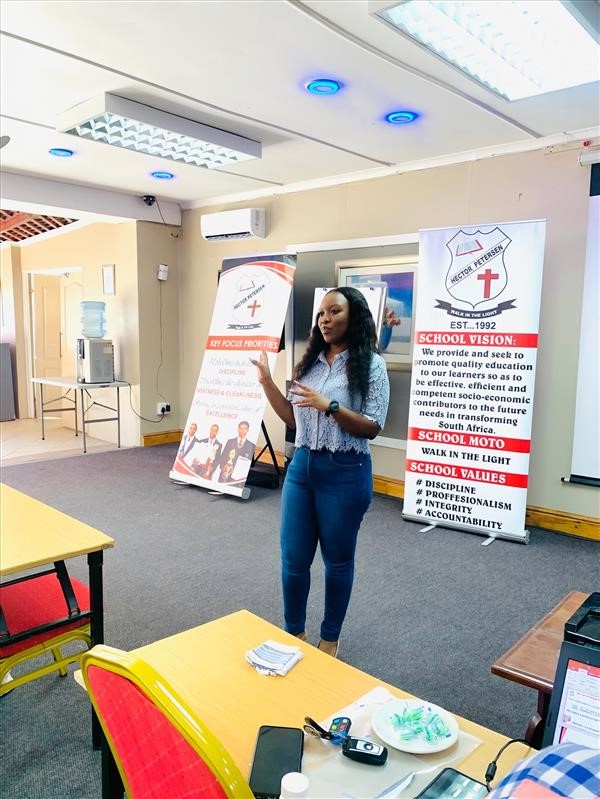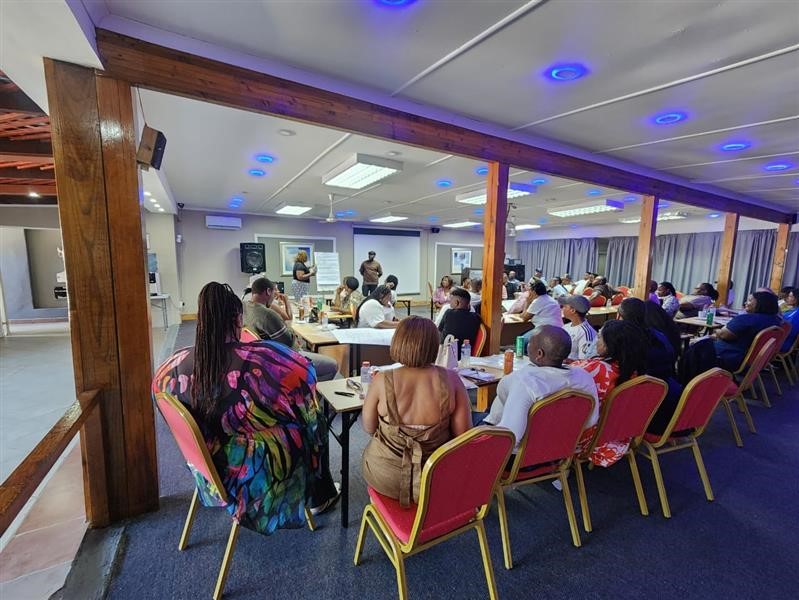

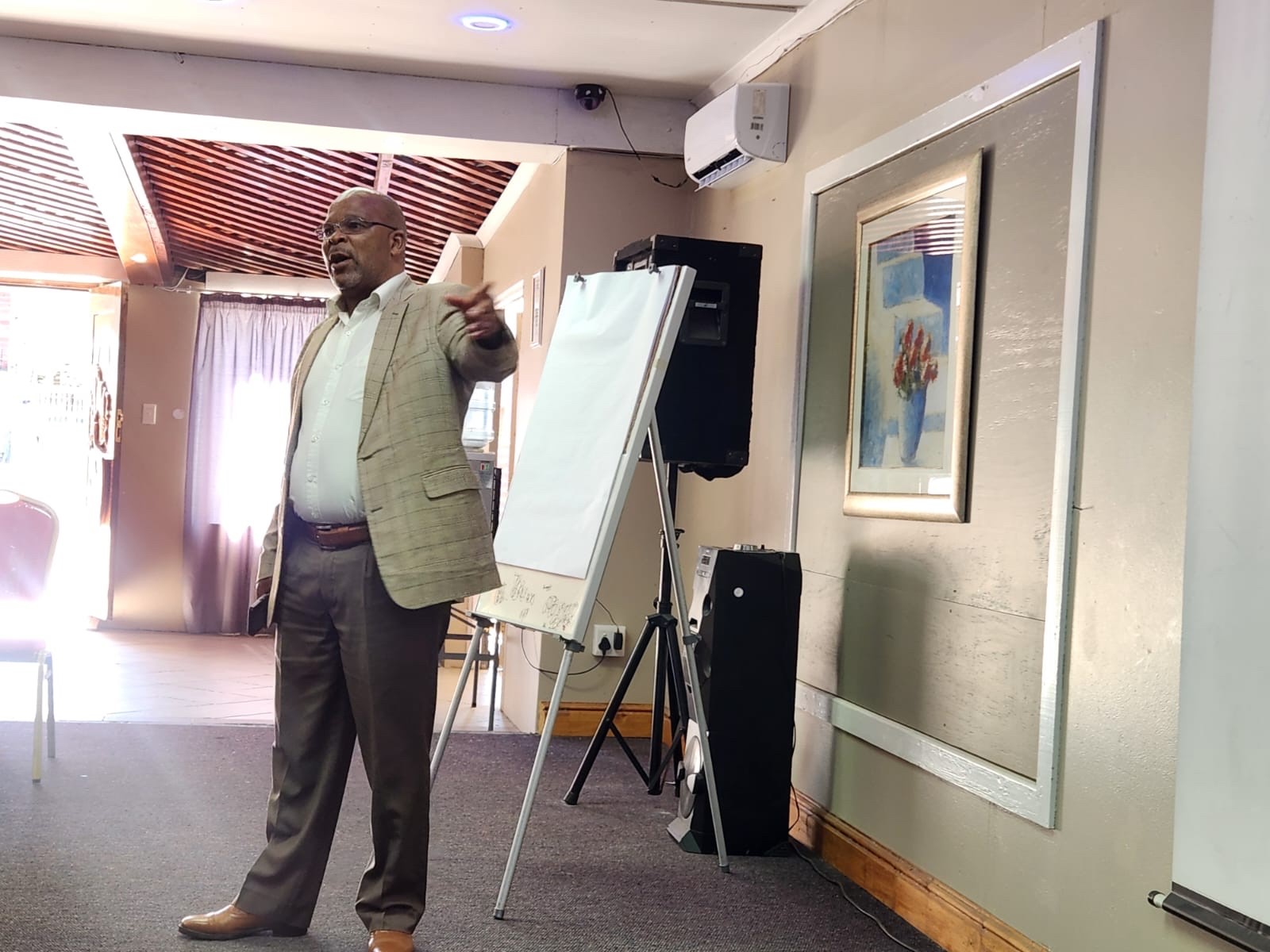
Hector Petersen sits in Zone 4, Zwelitsha, a township about 10km from Bisho, in the Eastern Cape. The principal, Mr Sizwe Ngwendu, opened the workshop we were there to facilitate with a declaration that stayed with me: "Excellence is what we are striving for — nothing less." And he meant it, the school results backed it up and the way he hosted the visioning workshop made one truly feel his conviction around pursuing excellence. The school's Grade 12 pass rate hit 94.8% in 2025, an all-time high. When COVID collapsed their rate to 75.6% in 2020, they didn't just recover. They rebuilt, reaching 90% in 2021 and climbing steadily from there. For a school in a resource-constrained township environment, that pass rate is not a matter of luck. It shows institutional character. What Mr Ngwendu said alongside presenting these results affirmed him as a visionary: "The infrastructure under construction [at the school] must be complemented by a clear vision and sense of direction." He clearly understands that bricks without strategy are just bricks and will not sustain their results. When educators become strategic thinkers The centrepiece of Day One was a visioning exercise built around an animal metaphor; a futures facilitation technique that lowers the barrier to strategic thinking by inviting people into imagination before analysis.
Four groups. Four animals: a bee, a black stallion, an eagle, a cheetah. Four groups working independently landed on the same themes: excellence, discipline, teamwork, community impact, resilience. The bee group built an entire systems model; a bee hive as the school, honey as results, each bee with a defined role. In education futures work, we talk about shared mental models; the underlying beliefs that shape how a community understands itself and its possibilities. What I witnessed was a management team that had organically built one. They just hadn't been given the framework to name it, or the space to act on it. Social catalysts Mr Ngwendu didn't describe his school's role the way most principals do. He used the language of Social Reconstructionism ; a philosophy that positions schools as agents of community transformation, not just academic delivery machines. In plain terms: they see themselves as social catalysts. When school leadership understands their role as changing society, it creates an obligation on the rest of society to meet them there. They are institutions that are critically aware that their work strengthens the social fabric, and that underfunding, poor resource allocation, and weak partnerships directly undermine the results we all say we want. School results are not divorced from societal change. A 94.8% pass rate in Zwelitsha is not just an education statistic. It is evidence of a community holding itself together.
What the facilitation revealed Our post-workshop debrief included an observation I keep returning to: engagement with new concepts waned over the course of the day. The team did better in shorter, sharper bursts than in sustained strategic immersion. This is not a reflection on the people in that room. It is a structural reality about how school leadership development is designed, in South Africa and elsewhere. Management teams are trained to respond to compliance demands, not to hold space for complexity. The tools of strategic planning (problem trees, outcome mapping, results chains) are powerful, but they require cognitive infrastructure that takes time to build, and that time is rarely protected. Once-off visioning workshops are necessary but not sufficient. The real work happens in the follow-up — when the vision statement becomes a development plan, when the development plan changes how the SMT meets and decides, when the school's own M&E starts reflecting the outcomes the team identified rather than just what the DBE requires. That is where most school development initiatives fall short. It is also where the most valuable work lives. The question I'm sitting with We talk a lot about school results in this country. We track pass rates, throughput, rankings. What we talk about less is what we owe the schools that are already doing the work, the ones in the dusty streets of Zwelitsha that have built something real with inadequate resources, on the strength of leadership conviction alone. Hector Petersen doesn't need to be discovered. It needs to be resourced, partnered, and taken seriously as the social infrastructure it already is. That's the work.
Samukelisiwe Mnguni is the founder of Precise Development, a consultancy working with organisations driving social impact in South Africa. She is an child rights advocate, an impact measurement specialist, strategic facilitator, and MSc candidate in Education Futures at the University of Edinburgh. Interested in what strategic facilitation could unlock for your organisation? [Book a 30-minute discovery call.]